Agile Font: A Stylish Script for Web Design
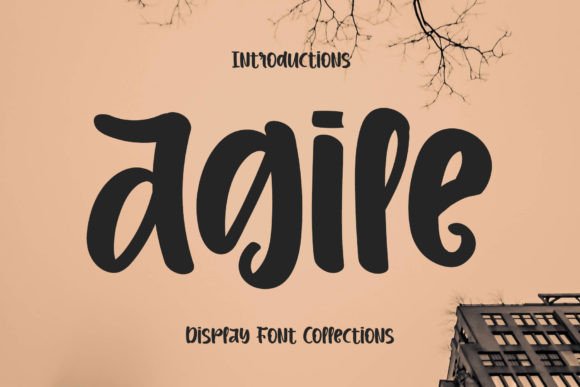
Agile is a script font that brings a whimsical and stylish touch to digital projects. As a web designer, you know the importance of choosing the right typeface to enhance visual hierarchy and brand identity. Agile fits perfectly into this equation, offering a unique blend of elegance and playfulness that works across multiple design contexts.
Designed with digital usability in mind, Agile maintains clarity even at smaller sizes. Its flowing lines and consistent stroke weights make it ideal for headers, buttons, and decorative elements without sacrificing readability. Whether you're working on a landing page or an online store, Agile adds a personal and creative flair that stands out.
Agile in Web Design: From Headers to Branding
Web designers often use Agile for headers and hero sections where visual impact matters most. Its fluid curves and dynamic shape create a sense of movement that draws attention. For example, a creative portfolio site could use Agile for the main title, paired with a clean sans serif for body text to balance contrast and legibility.
In a boutique online store, Agile can elevate product labels and banners. Imagine a small business using Agile for a "Limited Edition" tag on a product page. The font's personality adds a sense of exclusivity and charm that resonates with customers. It also works well for call-to-action buttons, where a handwritten feel can make a CTA more inviting and approachable.
Readability and Visual Hierarchy
When using Agile in web layouts, consider how it interacts with other elements. On mobile screens, ensure there's enough space between letters and lines to maintain readability. Agile performs well on light backgrounds but may require adjustments when placed over images or dark areas. Adding subtle padding or a white background box can help it stand out without overwhelming the user.
For small buttons or icons, Agile might be too ornate. In such cases, use it sparingly—perhaps as a decorative accent rather than the primary text. Its versatility allows it to function as both a headline font and a supporting element, depending on the design needs.
Agile in Different Digital Projects
A coaching website could benefit from Agile in its blog headers or course titles. The font’s friendly yet professional tone aligns with the brand’s message, making it easier for visitors to connect emotionally. Similarly, a digital course sales page might use Agile for the main title, paired with a simple serif font for the description to guide the reader through the content.
For social media graphics or email newsletters, Agile adds a personal touch that feels authentic. It’s especially effective in promotional banners or event announcements, where a handcrafted look can enhance engagement. When used in combination with a modern sans serif, Agile creates a balanced and cohesive visual language.
Font Pairing and Design Consistency
Pairing Agile with other fonts is key to maintaining a clean and professional look. A common approach is to pair it with a neutral sans serif like Open Sans or Lato for body copy. This contrast highlights Agile’s uniqueness while keeping the overall design readable and structured.
For editorial designs or blogs, combining Agile with a serif font like Georgia or Playfair Display can add depth and sophistication. This pairing works well for long-form content, where the script font provides a welcoming entry point while the serif ensures clarity and flow.
Practical Considerations for Web Use
Before integrating Agile into a project, check the available styles, weights, and file formats. Ensure the font supports web use by confirming that it includes WOFF and WOFF2 files for optimal performance. If the font offers alternates or ligatures, these can add subtle variations that enhance the design without complicating the layout.
Agile also supports multilingual characters, making it a good choice for international brands or websites targeting diverse audiences. Always verify that the font includes the necessary glyphs for your target languages to avoid display issues.
Commercial Licensing and Usage
When using Agile for client projects, online stores, or digital templates, confirm the commercial license terms. Some fonts restrict use in specific contexts, so it’s important to understand what’s allowed. For instance, a font licensed for personal use may not be suitable for a client’s website unless an extended license is purchased.
As a digital product creator, you’ll want to ensure that Agile is properly embedded in your design assets. Using a webfont service like Google Fonts or Typekit can simplify the process and improve load times. Always test the font across different devices and browsers to ensure consistency and performance.
Agile is more than just a pretty script—it’s a tool that enhances the user experience and reinforces brand identity. Whether you’re designing a logo, crafting a landing page, or building a digital brand kit, Agile offers a versatile and expressive solution that aligns with modern web design principles.